
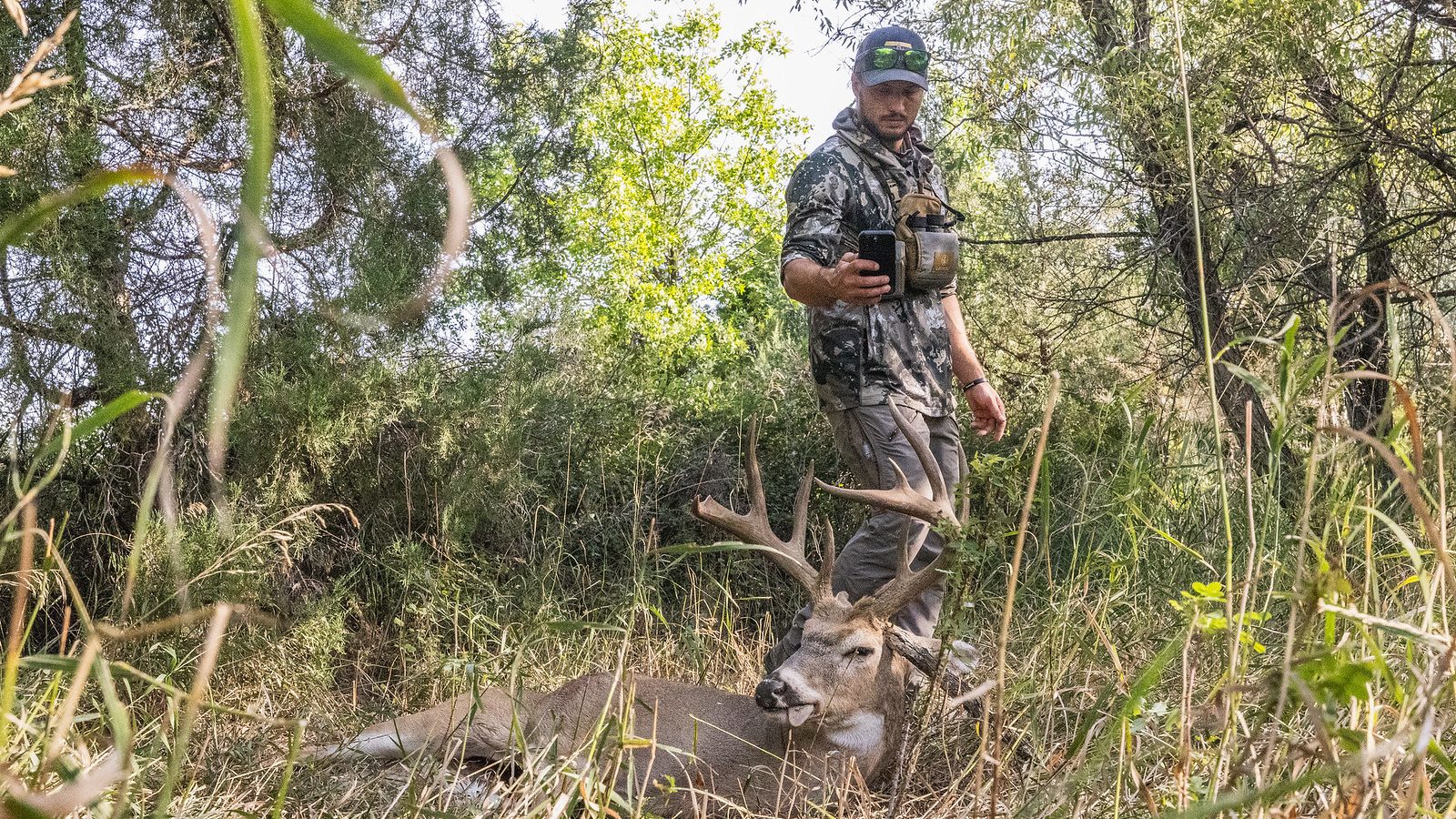
In most states, a whitetail buck that scores 130 inches or more (gross typical) is considered a trophy. In the Midwest, the bar is closer to 140 inches, while in the Northeast and heavily pressured areas, a mature 120-inch buck can be a true trophy.
Every deer hunter asks the same question at some point, whether they're standing over a downed buck, back at camp, or looking at a rack on the wall months later: "Is this a trophy?"
The honest answer is that it depends. A trophy buck isn't defined by one number. It's shaped by where you hunt, the deer's age, local genetics, hunting pressure, and your own expectations. Still, scoring benchmarks give hunters a clear way to judge what they've taken and how it compares regionally.
Here's what qualifies as a trophy buck, how scoring works, and where your deer may fall depending on where it was harvested.
What Makes a Buck a Trophy?
At its core, a trophy buck is one that stands above the local average. That could mean:
- Exceptional antler size
- Rare symmetry or mass
- Advanced age
- A new personal best
- A deer that took years of patience and strategy
From a scoring standpoint, most trophy conversations revolve around gross typical score, measured using Boone and Crockett (B&C) standards. Record-book entries are elite, but most hunters define a trophy well below that threshold.
Trophy Buck Score Benchmarks (Quick Reference)
These benchmarks are widely used across the whitetail world:
| Gross Typical Score | How It's Commonly Viewed |
|---|---|
| 120–129 inches | Solid, mature buck; a trophy in the Northeast, Southeast, and heavily pressured areas |
| 130–139 inches | Strong trophy in most states |
| 140–149 inches | High-end trophy nearly anywhere |
| 150+ inches | Exceptional buck; a once-in-a-lifetime deer for most hunters |
These aren't rules; they're reference points. A 130-inch buck is outstanding in some states and a good but not rare deer in others.
Trophy Buck Scores by State and Region
| Region | States | Trophy Benchmark | Exceptional |
|---|---|---|---|
| Midwest | Iowa, Illinois, Kansas, Ohio, Indiana | 140 inches | 150–170+ inches |
| Upper Midwest & Plains | Wisconsin, Minnesota, Missouri, Nebraska | 135–140 inches | 150+ inches |
| South | Texas, Alabama, Mississippi, Georgia | 125–135 inches | 145–160+ inches (managed land) |
| Northeast | Pennsylvania, New York, New England | 120–130 inches | 140+ inches |
| Southeast & Appalachia | Kentucky, Tennessee, Virginia, West Virginia, the Carolinas | 120–130 inches | 140+ inches |
Midwest (Iowa, Illinois, Kansas, Ohio, Indiana)
The Midwest sets the bar high thanks to rich soil, strong genetics, and managed pressure. A 140-inch buck is often considered the minimum "true trophy," and 160-class deer are realistic goals for disciplined hunters.
Upper Midwest and Plains (Wisconsin, Minnesota, Missouri, Nebraska)
Heavy hunting pressure in some areas lowers the age structure, making fully mature bucks harder to find. That raises the trophy value of deer that score a little lower than Midwestern giants.
South (Texas, Alabama, Mississippi, Georgia)
Southern trophy standards vary widely by property and management style. In Texas especially, gross score should be weighed against age and mass. A heavy, old 130-inch buck can be more impressive than a younger deer that scores higher.
Northeast (Pennsylvania, New York, New England)
Shorter growing seasons and higher pressure shift expectations. Age class matters more than inches here, and a 5½-year-old buck that breaks 130 inches is a serious accomplishment.
Southeast and Appalachia
Steep terrain and dense cover make patterning mature bucks extremely difficult. That raises the trophy status of deer that might be overlooked elsewhere.
Record-Book Minimums: How They Compare
If you're wondering how your buck stacks up against the record books, these are the minimum net scores for typical whitetails:
- Pope and Young (archery): 125 inches
- Boone and Crockett Awards: 160 inches
- Boone and Crockett All-Time: 170 inches
Most trophy bucks never come close to B&C, and that's fine. These minimums show just how rare a book buck is, and why a 140-inch deer is something to be proud of.
Gross Score vs. Net Score: Which Matters for a Trophy?
Gross score is the total inches a rack measures before any deductions. It's the number you hear at deer camp, see on social media, and use for quick comparisons. It reflects the rack's overall size, including mass, tine length, and spread.
Net score subtracts deductions for differences between the left and right sides, such as uneven tine lengths or mismatched mass. It rewards racks that are nearly identical on both halves.
For most personal trophies, gross score defines bragging rights. A big, heavy, character-filled buck is often more memorable than a perfectly balanced one. Net score matters most for official record books, where symmetry counts. Knowing both gives you a complete picture of your buck's standing.
New to scoring? Our step-by-step guide on how to score a deer rack walks through every measurement.
Why Hunters Misjudge Trophy Size
Even experienced hunters get it wrong when estimating a rack by eye. A few common reasons:
- Ground shrinkage. Many bucks look noticeably smaller when you walk up to them than they did on the hoof.
- Antler drying. Antlers lose moisture over time, which slightly reduces measurements. That's why Boone and Crockett requires a 60-day drying period before an official score.
- Tine length. Long points often look taller in the field than they measure.
- Inside spread. Spread is easy to overestimate from certain angles.
- Mass. Hunters often underestimate how quickly mass adds inches, or assume a rack is heavier than it is.
Because of these variables, many hunters are surprised once a rack is properly measured, and that moment often changes how they judge bucks going forward.
Why Photos Lie When Judging Trophy Size
One of the biggest mistakes hunters make is judging a rack from photos alone. A photo captures a single angle, and that angle can dramatically change how big or small a set of antlers looks.
- Camera angles. Holding a rack closer to the lens makes tines look longer and spreads wider. Shooting from above can make a rack look smaller.
- Ground contact. When a rack rests on the ground, the antlers can settle and look narrower or shorter than they are.
- Missing mass. Photos do a poor job of showing mass, one of the biggest contributors to score and one of the hardest things to judge without measuring.
That's why a buck that "looks like a 150" in a photo can measure in the 130s, and why a modest-looking deer can score far higher than expected.
This is also why any score estimated from a photo, by a person or by software, can only be as accurate as the angle allows. Trophy Scan takes a different approach: instead of guessing from a picture, you walk a slow circle around the antlers with your phone, and it measures a 3D scan of the antlers themselves.
How to Know If Your Buck Is a Trophy
Ask yourself three questions:
- Does it beat the average for my region?
- Is it one of the best deer I've taken or seen locally?
- Does it deserve documentation beyond a photo?
If you answered yes, it's worth scoring accurately and preserving. With Trophy Scan, you can score your deer with your phone in minutes, get a full breakdown from tine length to spread, and save a 3D model of your buck, whether it scores 125 inches or 175.
Frequently Asked Questions About Trophy Bucks
What score is considered a trophy buck?
In most regions, a whitetail scoring 130 inches or more (gross typical) is considered a trophy. In the Midwest, the benchmark is closer to 140 inches. In heavily pressured or northern states, a mature 120-inch buck can be an exceptional deer.
Is a 120-inch buck a trophy?
Yes, depending on region, pressure, and age. In much of the Northeast and Southeast, a mature 120-inch buck is a true trophy.
Is a 150-inch buck rare?
Yes. A 150-inch whitetail is considered a once-in-a-lifetime deer for most hunters, even in top Midwest states.
Does age matter more than inches?
For many hunters, yes. A fully mature buck with character and mass often holds more trophy value than a younger deer with slightly more inches.
Is gross or net score more important?
Gross score matters most for personal trophies and comparisons, and it's what most hunters talk about. Net score is used for official record books like Boone and Crockett and Pope and Young. Here's how to submit your trophy for official scoring.
What score does a buck need to make Boone and Crockett?
A typical whitetail needs a net score of 160 inches for the B&C Awards book and 170 inches for the All-Time book.
How accurate are digital deer scoring apps?
It depends on how the app measures. Apps that estimate score from a photo are limited by the camera angle and can't fully capture mass. Apps that measure a 3D scan, like Trophy Scan, remove those guesses and measure the antlers themselves.
Final Thoughts
A trophy buck isn't defined by social media reactions, viral photos, or even record books. It's defined by context, effort, and accuracy: the conditions of the hunt, the decisions made in the field, and what the deer means to you.
Understanding regional benchmarks helps you set realistic expectations and appreciate how your deer compares where you hunt, not against out-of-context standards. Knowing your buck's actual score makes sure it's remembered correctly, with no second-guessing years later.
Whether your buck is a once-in-a-lifetime giant or a personal milestone, accurate scoring and proper documentation give that moment lasting value, turning a great day in the woods into a legacy you can share and pass on for generations.
Find out what your buck really scores. Download Trophy Scan free for iPhone or Android and scan your antlers in minutes.